
Optimism Has Dipped — It might be time to get back to basics
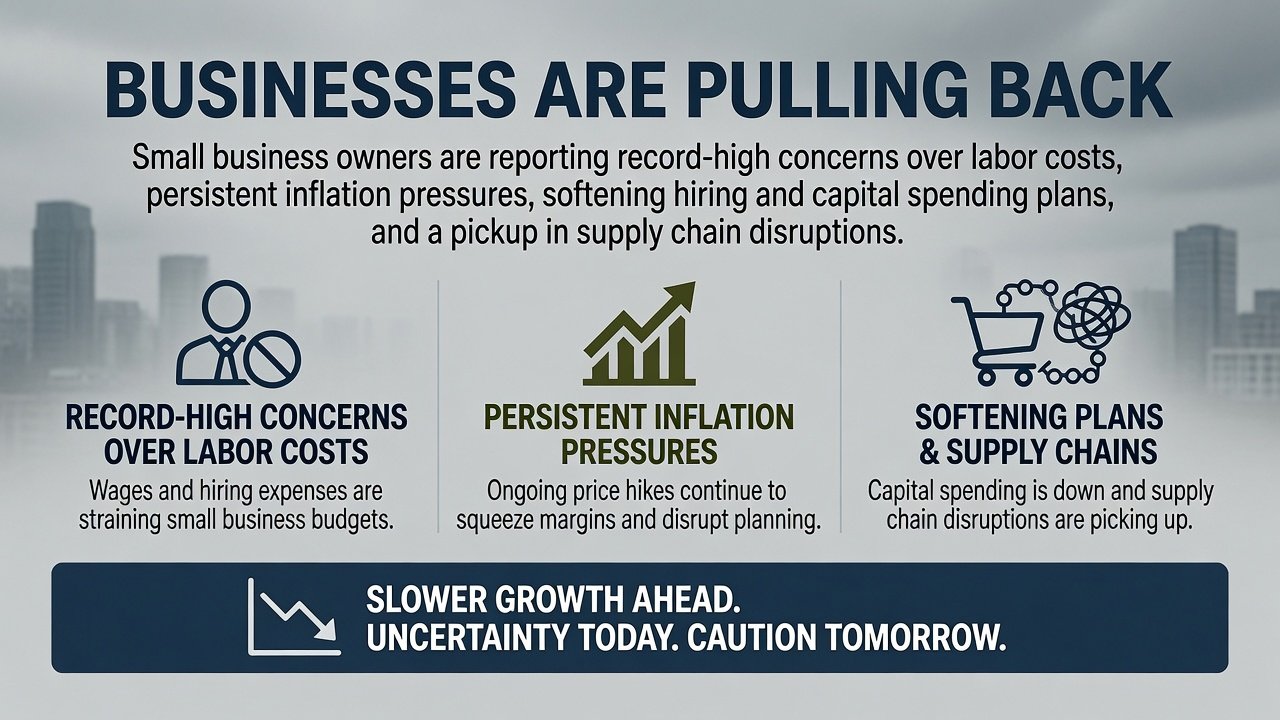
The latest NFIB Small Business Economic Trends report for May 2026 shows the Optimism Index falling 0.6 points to 95.3, remaining below the long-term average of 98.0. The Uncertainty Index rose to 91, well above its historical norm. Small business owners are reporting record-high concerns over labor costs, persistent inflation pressures, softening hiring and capital spending plans, and a pickup in supply chain disruptions.
These conditions create real challenges, but they also highlight the importance of strong financial visibility and proactive decision-making. Here are practical steps small business owners can take to build resilience right now.
1. Strengthen Your Bookkeeping Foundation
Clean, timely books are your best defense when cash flow feels unpredictable and costs are rising.
Reconcile monthly without delay — Catch discrepancies early so you’re not surprised at tax time or when reviewing profitability.
Track key metrics weekly — Monitor cash flow, accounts receivable aging, and expense trends. Even simple dashboards in QuickBooks Online can reveal where money is leaking or where opportunities exist to tighten operations.
Prepare for year-end now — Organize receipts, categorize transactions consistently, and review inventory and fixed assets. This reduces stress and potential audit exposure later.
Accurate bookkeeping turns uncertainty into actionable data.
2. Leverage Professional Accounting for Clarity and Compliance
With inflation and labor costs topping the list of concerns, professional financial reporting and analysis become critical tools.
Review financial statements regularly — Profit & loss trends, balance sheet health, and cash flow forecasts help you spot issues (or opportunities) before they escalate.
Optimize tax planning proactively — Work with a trusted advisor to identify legitimate deductions, credits, and deferral strategies that ease the burden of rising costs.
Stress-test your numbers — Model different scenarios for labor, supply, and pricing changes to build a more resilient plan.
Good accounting doesn’t just keep you compliant — it gives you confidence in your decisions.
3. Apply Strategic Business Advisory to Adapt and Grow
When broader sentiment is cautious, targeted strategy helps you protect the present while positioning for the future.
Refine your growth plan — Revisit pricing strategies to better absorb cost increases without losing customers. Explore operational efficiencies, including AI tools that can reduce manual work in admin, marketing, or customer service.
Focus on cash flow optimization — Prioritize high-margin activities, negotiate with vendors where possible, and maintain appropriate reserves.
Build operational resilience — Assess supply chain alternatives, cross-train staff, and create contingency plans for labor shortages or cost spikes.
Business advisory support helps translate these ideas into a clear, executable roadmap tailored to your size and industry.
Moving Forward with (more) Confidence
Economic cycles are normal, and many businesses emerge stronger by maintaining discipline in their financials and staying adaptable in their strategy. By being proactive now, small business owners can better weather current headwinds and prepare for the next positive shift.
At Kyma Advisors, we support Sarasota-area and remote clients with these exact needs through expert bookkeeping, accounting, and business advisory services — all backed by Intuit ProAdvisor Gold certification in QuickBooks Online and Enterprise Suite.
#SmallBusiness #EconomicTrends #BusinessAdvisory #FindYourWave #KymaAdvisors #Sarasota
Source https://www.nfib.com/news/press-release/new-nfib-survey-small-businesses-report-reduced-optimism/
Full NFIB Report https://www.nfib.com/wp-content/uploads/2026/06/NFIB-SBET-Report-May-2026.pdf